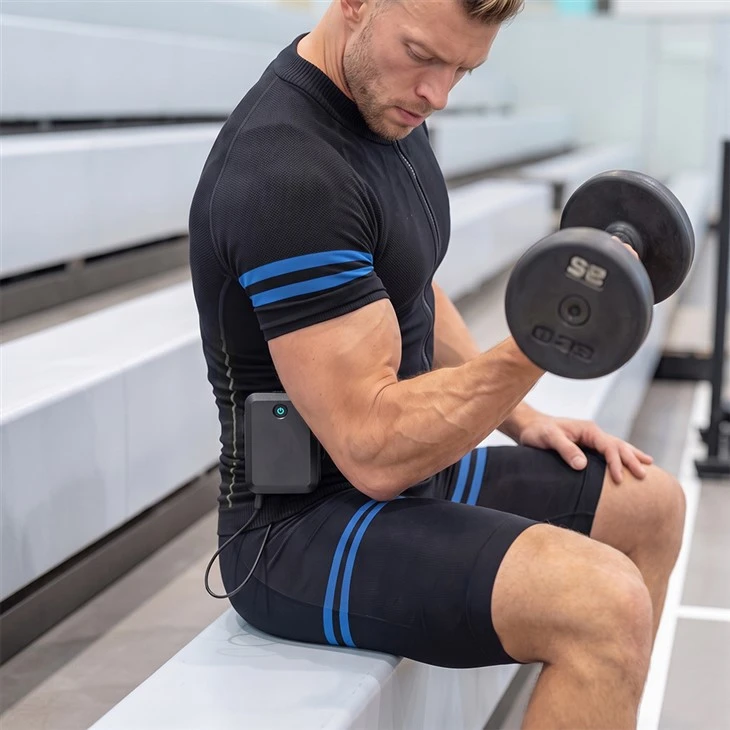
Scientific solution for efficient shaping training using EMS: from neural regulation to metabolic optimization
EMS (Electric Pulse Muscle Stimulation) training needs to be combined with active resistance training and precise parameter regulation to achieve shaping goals through optimizing neuromuscular efficiency. The following is a four stage plan for efficient shaping through EMS, integrating physiological mechanisms and training strategies:
1, Scientific cognition: the core logic of EMS shaping
Muscle growth boundary
EMS increases training capacity by recruiting more exercise units, especially type II muscle fibers, but muscle hypertrophy still requires mechanical tension stimulation (recommended in combination with weight-bearing training).
Data: The EMS+weight-bearing squat group showed an 18% increase in quadriceps thickness compared to the EMS group alone (8-week cycle).
Metabolic Enhancement Pathway
Electric pulse induced Ca ² ⁺ influx into muscle cells can enhance AMPK enzyme activity and promote fat oxidation. When combined with HIIT (high-intensity interval training), the EMS group showed a 31% increase in the rate of decrease in body fat percentage.
2, Training design principles
Collaborative training model
EMS as an auxiliary tool: superimpose pulse stimulation on movements such as self weight squats and plank supports to enhance the power of target muscle groups.
Active contraction priority: First complete the active contraction of 60-70% MVC, and then trigger EMS for reinforcement (to avoid passive dependence).
3, Efficient shaping plan (8-week cycle)
Stage 1: Neural adaptation period (1-2 weeks)
Training content:
EMS activation+self weight squat (3 groups x 15 times, pulse frequency 50Hz)
Flat support+abdominal EMS (2 sets x 45 seconds, duty cycle 50%)
Objective: To establish neuromuscular connections and correct motor compensation.
Stage 2: Metabolic Enhancement Period (3-5 weeks)
Training content:
Bulgaria Split Leg Squat+EMS Hip Leg Mode (4 sets x 12 times, frequency 80Hz)
Mountaineering Run+EMS Core Mode (30 second interval x 8 groups, 75% duty cycle)
Goal: Improve fat oxidation efficiency and sculpt muscle lines.
Stage 3: Strength Density Period (6-7 weeks)
Training content:
Load bearing hard pull+EMS back mode (4 groups x 8 times, frequency 60Hz+load 70% 1RM)
Single leg buttock push+EMS gluteus medius focusing (3 groups x 10 times/side, pulse width 400 μ s)
Goal: Increase muscle cross-sectional area and strengthen weak muscle groups.
Stage 4: Consolidation period of fine carving (8 weeks)
Training content:
EMS dynamic mode (frequency 100Hz)+battle rope training (20 second sprint x 6 sets)
Yoga flow+low-frequency EMS (10Hz) promotes fascial release
Goal: Optimize muscle separation and improve posture.
4, Efficiency Enhancement Strategy
Nutritional window period
Supplement whey protein+fast carbon (ratio 1:3) within 30 minutes after training to promote muscle glycogen recovery.
Daily intake of omega-3 fatty acids ≥ 2g can reduce the inflammatory response after EMS training.
Recovery technology integration
Use compression clothing+EMS low-frequency mode (1-10Hz) to accelerate lactate clearance.
Perform fascial knife release and EMS passive contraction once a week (with a duty cycle of 10%) to improve muscle elasticity.
5, Risk control
Taboo scenario: Avoid using EMS when dehydrated (dark yellow urine color) or sleep deprived (<6 hours).
Equipment compliance: Select equipment that has passed medical certification (such as MDD 93/42/EEC), ensuring that the current intensity is ≤ 100mA (safety threshold).
Conclusion: The key formula for EMS shaping
Efficient shaping=Active training (60%)+EMS precise stimulation (30%)+Nutritional recovery (10%)
Regard EMS as an "intelligent training partner" rather than a "lazy artifact", and through the collaborative design of parameters and movements, it can improve muscle recruitment efficiency by 30-50% in the same amount of time. Continuously monitoring electromyographic feedback (such as RMS value) and dynamically adjusting the plan can break through the adaptive plateau period of traditional training.