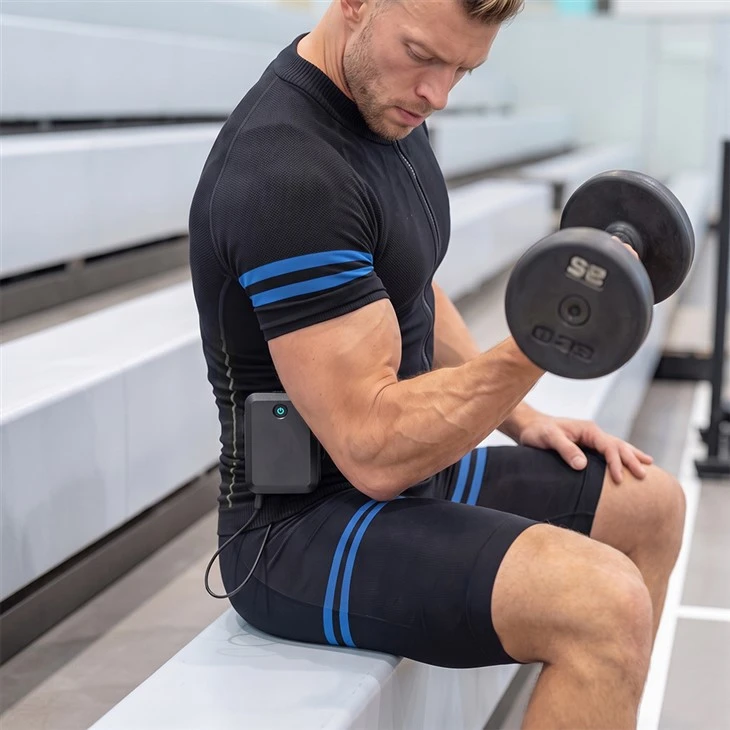
EMS fitness suits can be divided into the following types based on their technical characteristics, application scenarios, and functional designs, each type tailored to different needs:
1. Classify by training objectives
Muscle strengthening type
Features: High frequency (50-100Hz) electrical pulses, simulating high-intensity strength training (such as hard pulling and squats).
Applicable scenarios: Breaking through muscle strength bottlenecks and assisting traditional muscle building training.
Fat reducing and shaping type
Features: Medium low frequency (20-50Hz) pulses, combined with aerobic exercise mode, promote fat metabolism.
Applicable scenarios: Local shaping (such as vest lines, hip and leg lines).
Rehabilitation therapy type
Features: Medical grade equipment, precise control of parameters (such as 1-50Hz), avoiding muscle fatigue.
Applicable scenarios: postoperative recovery, muscular dystrophy, sports injury rehabilitation.
2. Classify by coverage area
Full body EMS suit
Design: A jumpsuit or split suit that covers major muscle groups such as chest, back, legs, and buttocks.
Advantages: Compound movement training (such as simulating rowing and mountaineering) can improve overall coordination.
Localized EMS service
Design: Tank top (core muscle group), shorts (buttocks and legs), arm sleeves (upper limbs).
Advantage: Targeted strengthening of specific muscle groups (such as postpartum abdominal tightening).
3. Classified by technology integration
Basic pulse type
Features: Fixed frequency and intensity, manually adjustable gear.
Target audience: Beginner users who pursue simple operations.
Intelligent biofeedback type
Features: Integrated electromyography sensor or heart rate monitoring, real-time adjustment of stimulation parameters.
Advantage: Avoid overtraining and improve training efficiency.
APP interconnected type
Features: Connect to a mobile app via Bluetooth to customize training plans (such as muscle building and marathon preparation).
Applicable scenarios: Advanced users pursuing personalized training.
4. Classify by usage scenario
Household portable type
Design: Lightweight vest or patch type device, supporting wireless use.
Advantages: Suitable for home or travel, fragmented training.
Commercial Professional Type
Design: Multi channel electrode pads (8-20 channels) for precise control of different muscle groups.
Applicable scenarios: gyms, rehabilitation centers, requiring professional guidance.
5. Classification by electrode type
Wet electrode suit
Features: It needs to be used together with conductive gel, with stable signal transmission but troublesome cleaning.
Applicable scenarios: Medical or high-intensity professional training.
Dry electrode suit
Features: Direct contact with skin, no need for gel, easy to wear.
Applicable scenarios: daily fitness, home use scenarios.
Summary and selection suggestions
Muscle building needs: Choose high-frequency full body EMS clothing combined with traditional strength training.
Rehabilitation needs: prioritize medical grade equipment and use it after consulting with a doctor.
Convenient for home use: We recommend smart apps that are interconnected, balancing efficiency and ease of use.
Localized shaping: Select targeted localized equipment such as armrests and shorts.
Attention: EMS fitness clothing cannot completely replace traditional training. It is recommended to combine multiple training methods according to one's own needs.