Ergonomic Engineering in EMS Apparel: Ensuring Signal Continuity through Precision Sizing and Compression
In the world of Electro Muscle Stimulation (EMS), the garment is more than just clothing-it is a conductive interface. If the fit is too loose, the electrode loses contact, causing "arcing" or stinging sensations. If it is too tight, it restricts blood flow and range of motion. For professional distributors, mastering the anthropometric logic of EMS sizing is the key to reducing returns and maximizing training efficacy.
1. The Science of Compression Gradients and Electrode Placement
To ensure that the 20+ electrodes in a professional EMS suit stay flush against the motor points during dynamic movements, we utilize a High-Modulus Fabric with a specific compression gradient. Our Shenzhen R&D team uses 3D body scanning to map muscle belly displacement during exercise, ensuring that the electrodes "track" the muscle even during peak contraction.
- Bi-directional Stretch: We employ a 70% Nylon / 30% Spandex blend that provides 360-degree tension, preventing electrode "floating."
- Anatomical Seaming: Flat-lock stitching is strategically placed to follow the natural lines of the musculoskeletal system, reducing friction during high-intensity HIIT sessions.
- Adjustable Strapping Systems: For professional studio suits, we integrate secondary tension straps to allow for micro-adjustments in the waist, arms, and thighs.
2. Technical Sizing Matrix: Global Market Variations
A major challenge for global B2B distributors is the variation in body types across different regions. A sizing chart optimized for the Asian market will not provide sufficient "depth" for the European or North American physique. Our factory provides a Three-Tier Sizing Architecture to accommodate global demographics:
| Sizing Logic | Target Physique | Key Pattern Adjustment |
|---|---|---|
| Slim Fit (Standard) | Low BMI / Athletic | Standard torso-to-limb ratio. |
| Curvy / Athletic Plus | High Muscle Mass / Mesomorph | Increased thigh and gluteal circumference. |
| Western XL Range | Broad Frame / High BMI | Extended torso length and reinforced crotch. |
3. Hardware-to-Garment Integration: The Connector Position
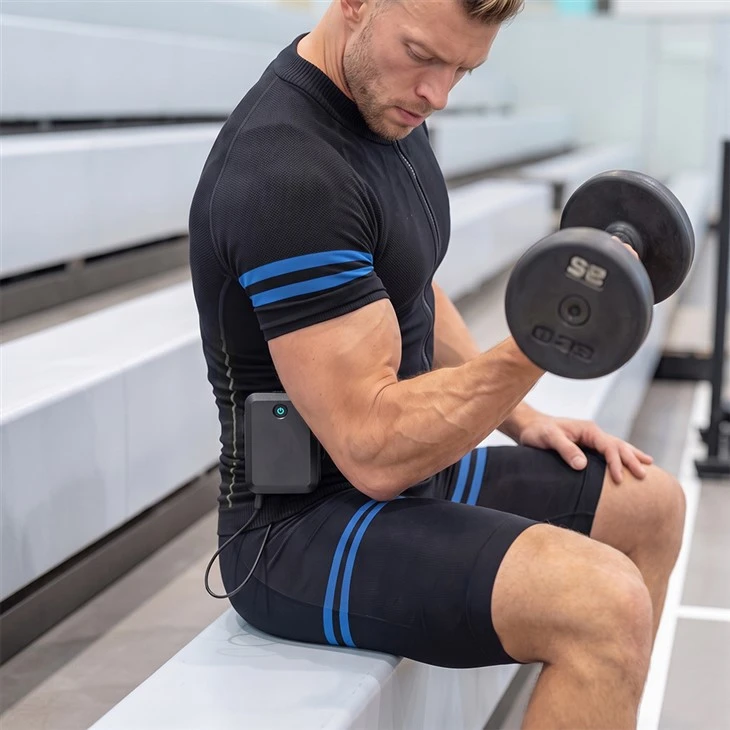
Ergonomics also extends to the energy box placement. The docking station must be located where it does not interfere with the lumbar spine during floor exercises (like sit-ups) or with the hip hinge during deadlifts. Most professional designs place the connector on the side or upper gluteal region to ensure maximum mobility and signal stability.
Manufacturing Insight: When evaluating a supplier, check the "Electrode-to-Skin" pressure. A professional suit should maintain a minimum of 15-20 mmHg of compression to ensure electrical impedance remains under 1000Ω.
4. EMS Sizing & Ergonomics FAQ
Q: What happens if a client is between two sizes?
A: For EMS training, we always recommend sizing down. A tighter fit ensures better electrode contact. If the suit is too loose, the "air gap" will increase resistance, causing the energy box to work harder and potentially causing skin discomfort.
Q: Do you offer unisex or gender-specific patterns?
A: Professional studios typically prefer gender-specific patterns. Female-cut EMS suits require more room in the chest and hip areas, while male-cut suits focus on broader shoulders and longer inseams to ensure precise electrode alignment with the respective motor points.